What Did Peter, James and John Do When They Restored the Melchizedek Priesthood?

Christ Restores the Authority to Confer the Holy Ghost — Part 2
Introduction
In Part 1, we considered the historical evidence concerning when and where Peter, James, and John appeared to Joseph Smith and Oliver Cowdery. But the surviving accounts raise another important question: What did those ancient apostles actually say and do? Unlike their record of the restoration of the Aaronic Priesthood, Joseph and Oliver left no detailed contemporary account or later recollection of the occasion. The answer must therefore be reconstructed from the revelations and events that followed—especially the Prophet’s record of the “voice of God” in Father Whitmer’s chamber, which voice he followed when the Church was organized on April 6, 1830.
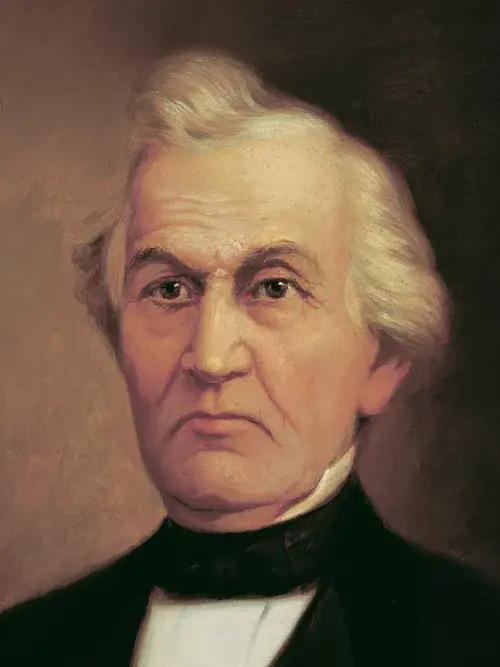
What did Peter, James and John say and do when they “restored” the Melchizedek Priesthood?
Members of the Church today often assume (as did members during Joseph Smith’s day) that what Peter, James and John said and did to restore the Melchizedek Priesthood mirrors what John the Baptist was reported to have said and done to restore the Aaronic Priesthood.1
Recall that in his 1838 history the Prophet Joseph reported that John the Baptist “ordained” them by laying his hands on them and said, “In the name of Messiah” (citing his authority), “I confer the priesthood of Aaron.” He then instructed Joseph and Oliver to baptize and ordain one another. (The record does not say whether they ordained one another to any specific Aaronic Priesthood office such as priest.)
The Prophet also indicated that John the Baptist’s conferral of priesthood authority included certain keys, including keys for “the gospel of repentance” (which could include a bishop’s authority to receive confessions and aid in the repentance process) and to administer the ordinance “of baptism by immersion for the remission of sins.”
He further taught the Prophet about the contrasting priesthood authority he was then conferring with the higher authority Peter, James and John would later confer on them. John the Baptist explained: (i) “this Aaronic priesthood had not the power of laying on of hands, for the gift of the Holy Ghost, but that this should be conferred on [them] hereafter;” (ii) “he acted under the direction <of> Peter, James, and John, who held the keys of the priesthood of Melchisedeck, whi[c]h priesthood he said should in due time be conferred on us;” and (iii) “that I should be called the first Elder of the Church and he [Oliver] the second.”2
Unfortunately, however, neither Joseph Smith nor Oliver Cowdery recorded a similar narration of Peter, James and John’s visit.3 Thus, what information we can glean about what they said and did on that occasion must be pieced together by historians from later revelations and other sources. Further, even the precise chronological order of these revelations is not precisely known. What follows, however, is a summary of these revelatory and other statements in an order that appears to be consistent with the historical record.
What this record shows is that the restoration of the fulness of the Melchizedek Priesthood and its keys, including the Prophet’s understanding aided by subsequent revelations about the priesthood, came about line upon line, not all at once.
· “Within the first days of June 1829”4—revelation to Oliver Cowdery. This revelation became Chapter XV in the Book of Commandments5 and later Section 18 of the Doctrine and Covenants. In it the Lord said, “I speak unto you, even as unto Paul mine apostle, for you are called even with that same calling with which he was called” (D&C 18:9). This language suggests that before the date of this early June 1829 revelation, the Lord had “called” Oliver as an apostle. As commentators have noted, to be “called as apostle,” in the case of Paul, meant to be “ordained” to the apostleship.6
· About June 4, 18297 —Joseph and Oliver arrive at Peter ("Father") Whitmer’s home in Fayette and resume the translation. After their move to the Whitmer’s, the translation continued at its incredible Heaven-assisted rate. Joseph recorded in his history in the “mean time we continued to translate, at intervals, when not necessitated to attend to the numerous enquirers, that now began to visit us; some for the sake of finding the truth, others for the purpose of putting hard questions, and trying to confound us.”
Word of the work was spreading. Among the hearers were many honest in heart. “Almost daily,” the Prophet reported in his 1838 history, “we administered the ordinance of Baptism for the remission of sins, [to] such as believed.”8 As they administered the first ordinance of the Gospel of Jesus Christ, they became more anxious to receive the promised power to administer the second—to confer the gift of the Holy Ghost.
Images of the Peter Whitmer Sr. home and upper chamber courtesy of The Church of Jesus Christ of Latter-day Saints © Intellectual Reserve, Inc.
· About the “middle of June”9—God’s Voice Directs Joseph and Oliver to Ordain One Another as Elders in His Church at a future date. Joseph later recounted, what some historians have described as his “Fourth” vision or revelation, following his First Vision, the visions or visitations by Moroni and John the Baptist10 —
We now became anxious to have that promise realized to us, which the Angel that conferred upon us the Aaronick [sic] Priesthood had given us, viz: that provided we continued faithful; we should also have the Melchesidec Priesthood, which holds the authority of the laying on of hands for the gift of the Holy Ghost. We had for some time made this matter a subject of humble prayer, and at length we got together in the Chamber of Mr [Peter] Whitmer’s house in order more particularly to seek of the Lord what we now so earnestly desired: and here to our unspeakable satisfaction did we realize the truth of the Saviour’s promise; “Ask, and you shall receive [sic], seek, and you shall find, knock and it shall be opened unto you;” for we had not long been engaged in solemn and fervent prayer, when the word of the Lord, came unto us in the Chamber, commanding us; that I should ordain Oliver [HC 1:60] Cowdery to be an Elder in the Church of Jesus Christ, and that he also should ordain me to the same office, accordin and then <to> ordain others as it should be made known unto us, from time to time.11
While Joseph’s 1838 statement—“we now became anxious [that] we should also have the Melchesidec Priesthood”—arguably could be read to assert that he and Oliver had not yet received the Melchizedek Priesthood, the totality of the record, in my view, does not support this conclusion.12
Continuing his account, the Prophet added—
We were however commanded to defer this our ordination untill[sic], such times, as it should be practicable to have our brethren, who had been and who should be baptized, assembled together, when we must have their sanction to our thus proceeding to ordain each other, and have them decide by vote whether they were willing to accept us as spiritual teachers, or not, when also we were commanded to bless bread and break it with them, and to take wine, bless it, and drink it with them, afterward proceed to ordain each other according to commandment, then call out such men as the Spirit should dictate, and ordain them, and then attend to the laying on of hands for the gift of the Holy Ghost, upon all those whom we had previously baptized; doing all things in the name of the Lord.13
Thus, there was no record that any ordination to any priesthood office occurred in connection with this revelation. Nor is there any language indicating the Lord was “conferring” priesthood authority at this time.
Rather, the Lord “commanded” Joseph to ordain Oliver an elder and then for Oliver to ordain Joseph. Such ordinations would require the previous conferral of priesthood authority. Thus, implicit in the Lord’s commandment is that Jospeh and Oliver would be acting—on the revealed date for the organization of the Church (April 6)—by the apostolic authority previously received from Peter, James and John. Likewise, it may be inferred that everything else the Lord commanded Joseph and Oliver to do at that time would be done by this same authority: (i) organize the Church; (ii) attend to the ordinations of other men to the office of elder in the Church “as the Spirit should dictate;”14 and (iii) confer upon baptized members the gift of the Holy Ghost.
· Later in June 1829—Oliver describes himself as an “apostle” in the Articles of the Church. Oliver relied on the Book of Mormon to draft a document entitled “Articles of the Church,” which set forth governing principles and procedures for the Church. In it, he declared “I am an Apostle of Jesus Christ,” indicating that he had, previous to this time, been duly called, or ordained, to the office of apostle, an office in the Melchizedek Priesthood.15 Notably, Cowdery quoted the Lord as having called him (or granted him authority) “to ordain Priests & Teachers.” Likewise, he provided in his articles that “The Elder or Priest” should “minister” “bread & wine.” Thus, while Joseph and Oliver had identified from their reading of the Book of Mormon, at this early date before the organization of the Church, four priesthood offices that should exist in the church of Christ—Teacher, Priest, Elder and Apostle—Oliver identified himself only as an apostle.
· At about this same time (later in June 1829)—Joseph Smith received direction from the Lord concerning the organization of the Church. While historians have been unable to determine the exact date or dates Joseph Smith dictated, or the complete manuscript history of, “The Articles and Covenants of the Church,” which was later canonized as Doctrine and Covenants 20, the JSP editors believe parts of it were received “as early as the summer of 1829 (the same time that Oliver Cowdery prepared his ‘Articles of the Church of Christ’).”16 Consequently, the JSP editors note, “the date on which the Church of Christ was to be organized was received by revelation in June 1829.”
Joseph Smith’s history dates this revelation as “immediately following the discussion of the heavenly communications in the home of Peter Whitmer Sr. in June 1829.” In that heavenly communication, as noted above, the Lord specified exactly when and how Joseph and Oliver would ordain each other as elders in the Church.
The articles and covenants of the Church of Christ agreeable to the will and commandments of God. The rise of the Church of Christ in these last days, being 1830 years since the coming of our Lord and Saviour Jesus Christ in the flesh, it being regularly organized and established agreeable to the laws of our country, by the will and commandments of God, in the 4th month, and on the 6th day of the same, which commandments were given to Joseph Smith, jun.17
The Lord then declared that Joseph Smith had been “called of God and ordained an apostle of Jesus Christ, an elder of the church.” He then added that Oliver Cowdery “was also called of God an apostle of Jesus Christ, an elder of the church, and ordained under his [Joseph’s] hand.”18
Because all the existing manuscripts of this revelation “speak of the formation of the church on 6 April 1830 as an accomplished fact, not a pending event,” the editors suggest that the text in the surviving manuscripts would have been revised. In other words, when originally given in June 1829, it would have spoken of the organization of the Church (and Joseph’s and Oliver’s ordinations of each other as elders) as future events to be realized on a revealed date, April 6. As finally canonized, however, the revelation referred to Joseph and Oliver having “been” ordained apostles (which occurred in May 1829) and having “been” ordained elders, including that Oliver was ordained an elder of the Church under the hand of Joseph, which, of course, occurred on April 6, 1830.19
· April 6, 1830—the Prophet follows the Lord’s directions for the organization of the Church and ordination of elders therein given in Father Whitmer’s Chamber. As the Lord had so carefully trained him to do over the preceding years, when the appointed time came to organize the Church on April 6, 1830, Joseph followed the Lord’s directions precisely. After opening the meeting in Father Whitmer’s home with prayer, “we proceeded,” Joseph’s history records, “according to previous commandment” as follows:
o The Prophet called “on our brethren to know whether they accepted us as their teachers in the things of the Kingdom of God, and whether they were satisfied that we should proceed and be organized as a Church according to said commandment which we had received;”
o Those present “consented by an unanimous vote;”
o “I then laid my hands upon Oliver Cowdery and ordained him an Elder of the [HC 1:77] ‘Church of Jesus Christ of Latter Day Saints.’ after which he ordained me also to the office of an Elder of said Church;”
o “We then took bread, blessed it, and brake it with them, also wine, blessed it, and drank it with them;”
o We then laid our hands on each individual member of the Church present that they might receive the gift of the Holy Ghost, and be confirmed members of the Church of Christ.”20
Conclusion
Taken together, these events show a carefully ordered progression: apostolic authority and keys were conferred before the Church existed; the Lord then directed how that authority would be exercised; and on April 6, 1830, Joseph and Oliver followed those instructions by organizing the Church, ordaining one another as elders, administering the sacrament, and confirming baptized believers.
Notes
1. Richard E. Bennett asserts that “Peter, James, and John acted in accordance with the previous pattern,” or in a phrase quoted from J. Reuben Clark, Jr., “by a ceremony equivalent to that by which the Aaronic Priesthood was restored.” Continuing, Bennett argues that “in conferring the Melchizedek Priesthood upon both men,” they, in turn, “now endowed with the necessary authority, . . . bestowed upon each other the gift of the Holy Ghost, though formal confirmation would have to wait until the Church was organized,” presumably referring to the confirmations performed in connection with the formal organization of the Church. School of the Prophet, 87, quoting J. Reuben Clark, Jr., On the Way to Immortality and Eternal Life (Salt Lake City: Deseret Book, 1949), 144. Neither Bennett nor President Clark specifically states that Joseph Smith and Oliver Cowdery were ordained to the office of elder at that time. Their statements can be read as being consistent with the view that Peter, James, and John conferred the Melchizedek Priesthood, apostleship, and associated keys (as discussed further below) upon Joseph and Oliver without addressing the separate question of when they were ordained to the office of elder.
2. “Revelation, June 1829–A [D&C 14],” Joseph Smith’s Revelations. See also Joseph Smith, “History, 1838–1856, volume A-1 [23 December 1805–30 August 1834],” 17–18, JSP, https://www.josephsmithpapers.org/paper-summary/history-1838-1856-volume-a-1-23-december-1805-30-august-1834/23. Upon the arrival of Oliver Cowdery and his companions in Ohio in the fall of 1830, newspaper editors mocked Joseph and Oliver’s reported claim to have “seen and conversed with Angels” and the claim by members of the Church to have received divine authority to baptize. See, eg., From Darkness to Light, 133-34 & nn. 53 & 54 (citing the Painsville Telegraph, “if these things are true, God has certainly changed his order of commission”).
3. After recounting that Joseph Smith had been ordained by John the Baptist “unto the lesser or Aaronic priesthood” on May 15, 1829, Oliver Cowdery, in his October 2, 1835 report on the restoration of the Aaronic Priesthood, added, “after this we received the high and holy priesthood: but an account of this will be given elsewhere, or in another place.” Oliver’s statement confirms that he distinguished the later reception of the “high and holy priesthood” from the earlier conferral of the Aaronic Priesthood. Oliver Cowdery, historical statement concerning Joseph Smith’s priesthood ordination, October 2, 1835, Patriarchal Blessing Book 1, 8–9, Church History Library, quoted in Cannon et. al, “The Earliest Accounts of the Restoration of the Priesthood,” 236–37. See also Joseph Smith Revelations, “Doctrine and Covenants 27,” Kindle Version 3973 note 13. The JSP editors note that “in the preface to his 1832 history, JS [also] indicated his intention to record his ‘reception’ of both ‘the holy Priesthood’ and ‘the high Priesthood,’ neither of which the unfinished 1832 history addressed. Joseph Smith Revelations, “Doctrine and Covenants 27,” Kindle Version 3973 note 13. Unfortunately, neither Oliver nor Joseph provided accounts detailing the specific date, place, words, or complete circumstances of the later event.
4. “Doctrine and Covenants 18: Revelation, June 1829–B,” Joseph Smith’s Revelations, https://www.churchofjesuschrist.org/study/church-historians-press/jsp-revelations/dc-018-1829_06_01_005?lang=eng.
5. Book of Commandments (Independence, Mo.: W. W. Phelps & Co., 1833), chap. XV, 34-38, Book of Commandments, 1833, 34, JSP, accessed October 14, 2026, https://www.josephsmithpapers.org/paper-summary/book-of-commandments-1833/38.
6. See Cannon, “The Earliest Accounts of the Restoration of the Priesthood,” 243 & n. 19. See 1 Timothy 2:7 (“Whereunto I am ordained a preacher, and an apostle, and a teacher of the Gentiles”). Cf. Acts 13:2-3 (describing Saul’s call to missionary service by the laying on of “hands”). Thus, when the Lord told Oliver Cowdery in the June 1829 revelation, “I speak unto you, even as unto Paul mine apostle, for you are called even with that same calling with which he was called” (D&C 18:9), the language suggests that like Paul, Oliver had been ordained an apostle by the laying on of hands (by Peter, James and John and possibly also by Joseph Smith, in the same pattern as occurred when they received the Aaronic Priesthood from John the Baptist).
7. Welch, “Timing of the Translation,” 47-48.
8. History, 1838–1856, volume A-1 [23 December 1805–30 August 1834], 26, JSP, accessed October 22, 2026, https://www.josephsmithpapers.org/paper-summary/history-1838-1856-volume-a-1-23-december-1805-30-august-1834/32.
9. MacKay, “Event or Process?,” 21 n. 47.
10. Bennett, School of the Prophets, 84, quoting B. H. Roberts, The Truth, The Way, The Life: An Elementary Treatise on Theology, edited by John W. Welch (Provo, Utah: BYU Studies, 1994), 470.
11. History, 1838–1856, volume A-1 [23 December 1805–30 August 1834], 26-27, JSP, accessed October 12, 2026, https://www.josephsmithpapers.org/paper-summary/history-1838-1856-volume-a-1-23-december-1805-30-august-1834/33.
12. See Fluckiger, "Christ Restores the Authority to Confer the Holy Ghost - Part 4," https://www.temple-spiritual-treasures.com/blog.
13. History, 1838–1856, volume A-1 [23 December 1805–30 August 1834], 26-27.
14. In determining the order in which the offices of “an apostle of Jesus Christ” and “an elder of the church” (D&C 21:1) were conferred upon the Prophet, John S. Thompson with Scripture Central looks for an answer in several historical clues. First, he notes that the Lord in several revelations refers to the Prophet as an elder in or of the church, suggesting that he did not receive the office of elder until his ordination by Oliver after or during the formal organization events on April 6. Secondly, the Articles and Covenants (later denominated Section 20 of the Doctrine and Covenants) listed as among the elder’s duties “to confirm the church [not members of the Church] by the laying on of hands and the giving of the Holy Ghost.” (Articles and Covenants, circa April 1830 [D&C 20], 4, JSP, accessed October 23, 2026, https://www.josephsmithpapers.org/paper-summary/articles-and-covenants-circa-april-1830-dc-20/1. It wasn’t until the 1835 edition of the Doctrine and Covenants that our current verse 41 was added to Section 20: “and to confirm those who are baptized into the church, by the laying on of hands for the baptism of fire and the Holy Ghost, according to the scriptures,” while retaining the previous phrase (now verse 43)“and to confirm the church . . ..” See Doctrine and Covenants, 1835, 79 verse 8, JSP, accessed October 23, 2026, https://www.josephsmithpapers.org/paper-summary/doctrine-and-covenants-1835/87.) The Lord repeated this instruction in a July 1830 revelation to Joseph, describing as among the duties of his “office” to “continue in laying on of the hands and confirming the churches” (D&C 24:9). Thus, the office of an elder is to “confirm” or strengthen established units of the Church by, among other things, laying on hands for the Gift of the Holy Ghost. J. Thompson, “Restoring Melchizedek Priesthood,” 284.
15. Appendix 3: “Articles of the Church of Christ,” June 1829, 1, JSP, accessed October 13, 2026, https://www.josephsmithpapers.org/paper-summary/appendix-3-articles-of-the-church-of-christ-june-1829/1. Oliver’s articles, the JSP editors note, were superseded by the “Articles and Covenants,” which the Prophet received by revelation and which became Section 20 of the Doctrine and Covenants:
Oliver Cowdery wrote “Articles of the Church of Christ” in June 1829 in response to a JS revelation that commanded him to “rely upon the things which are written” in order to “build up my church.” The content and tone are similar to JS’s April 1830 “Articles and Covenants,” a text that was presented at the church’s first conference and adopted by vote as a governing document. Both texts relied on the same Book of Mormon passages and both were written to govern believers, but Articles of the Church of Christ was superseded once the church was established and was never ratified by the membership. John Whitmer seemed to recognize the two as independent documents by including both in Revelation Book 1, as if they were discrete revelatory texts. JS, however, did not write or dictate Articles of the Church of Christ, and it was not included in either the Book of Commandments or the Doctrine and Covenants (Historical Information,” footnotes omitted).
16. “Doctrine and Covenants 20: Articles and Covenants, circa April 1830,” Joseph Smith’s Revelations, https://www.churchofjesuschrist.org/study/church-historians-press/jsp-revelations/dc-020-1830_04_01_030_22?lang=eng.
17. Articles and Covenants, circa April 1830 [D&C 20], 4, JSP, accessed October 14, 2026, https://www.josephsmithpapers.org/paper-summary/articles-and-covenants-circa-april-1830-dc-20/1. See D&C 20:2-3).
18.Ibid.
19. “Doctrine and Covenants 20: Articles and Covenants.”
20. History, 1838–1856, volume A-1 [23 December 1805–30 August 1834], 36-37, JSP, accessed October 13, 2026, https://www.josephsmithpapers.org/paper-summary/history-1838-1856-volume-a-1-23-december-1805-30-august-1834/43. See also MacKay, “Event or Process,” 22-24.


Comments